KZ-Gedenkstӓtte Neuengamme - 81st anniversary of the liberation
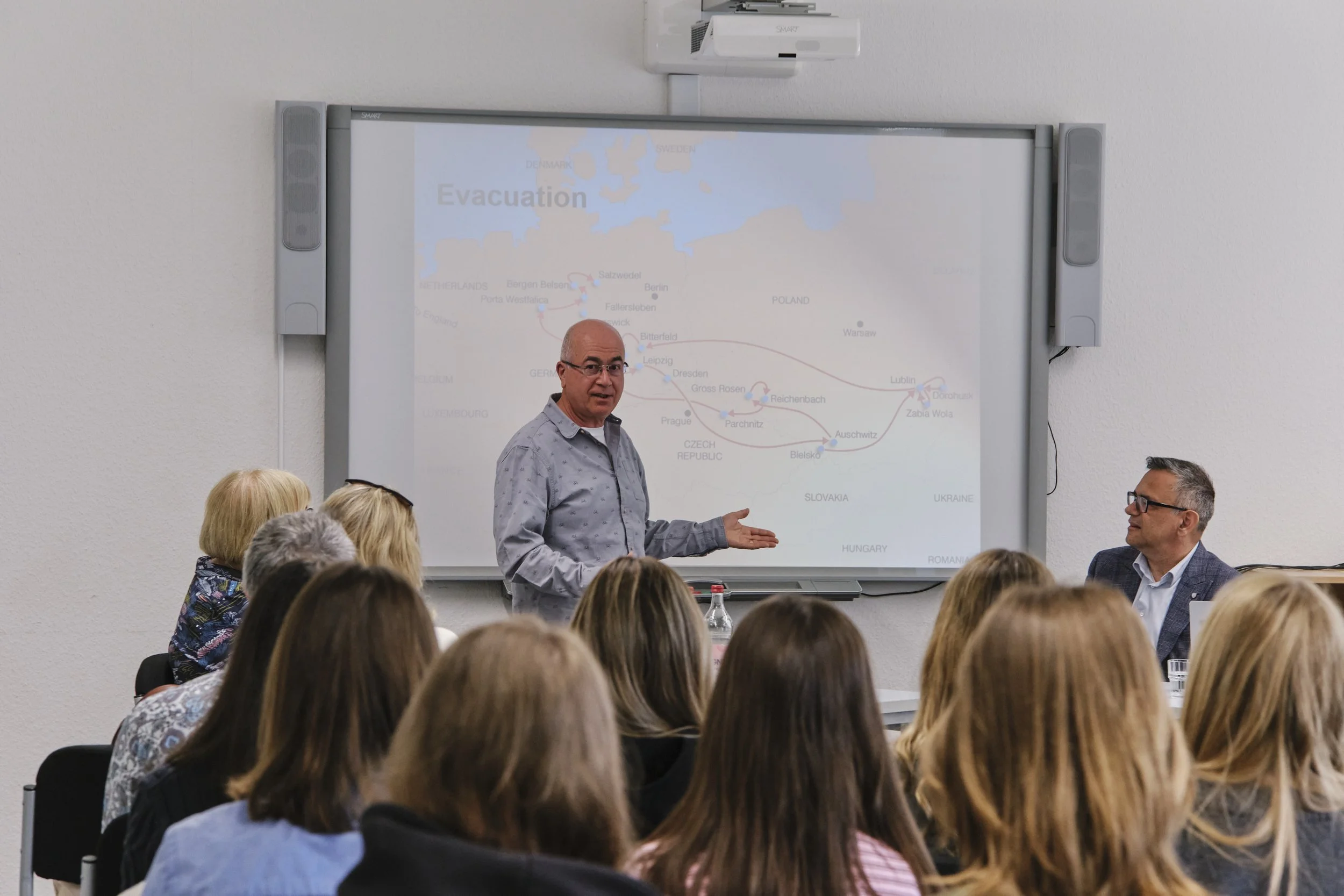
From 2nd to 4th May 2026, Peter and Moira attended the KZ-Neuengamme concentration camp, 81st anniversary of liberation commemoration events. This concentration camp was the main camp to the three satellite camps that Peter’s mother, Kitty, was sent to in early 1945. These were at Porta Westfalica, Fallersleben and Salzwedel (where she was eventually liberated by the US army). The Neuengamme camp is located close to Hamburg. On Saturday, Peter and Moira were given a personal 3-hour tour of the camp by one of the freelance historians working there. KZ-Neuengamme was a forced labour camp. It housed political and Resistance prisoners from all over Europe. The prisoners worked in the brick factory onsite - located there because the ground in the area and surroundings was clay. They were required to dig the clay by hand, load it into trucks and then push these heavy trucks up a very steep ramp into the factory. Many prisoners died from exhaustion, but just in case, the Nazis installed a gas chamber onsite. Towards the very end of the war, the Nazis evacuated the camp and sent many prisoners out on ships into the Baltic sea from Neustadt to remove evidence of what had taken place from the approaching Allies. The ships were not marked as holding prisoners and were subsequently bombed by the Allies who thought they carried Nazi troops. Around 7,000 prisoners died. The Nazis knew this would be the case. On Sunday 3rd May in the morning, Peter and Moira joined relatives of the 7,000 prisoners who had died to be taken out into the Baltic Sea to the exact spot where the ship, Cap Ancona, was bombed. They all laid roses into the sea and held a minute’s silence.
In the afternoon Peter and Moira attended the 81st anniversary of liberation of KZ-Neuengamme commemoration ceremony. There were speeches from Professor von Wrochem, Director of KZ-Gedenkstӓtte Neuengamme, Carola Veit, President of the Hamburg Parliament and other dignitaries and survivors. It was a moving afternoon. Peter and Moira were particularly moved by these words from Carola Veit,
“Eighty-one years ago today, on May 3, 1945, World War ll came to an end for Hamburg, even before the Allies officially liberated the entire country five days later on May, 8. At the time, the official line was usually: “liberated from Nazi tyranny.” As if the Nazis had been some kind of foreign occupying power or invaders who had forced the Germans to commit these terrible crimes. But the truth is: the Germans had elected this undeniably far-right government themselves, and many - far too many - had approved of its actions for years, supported it, or at least done nothing to oppose it, or simply looked the other way. That, ladies and gentlemen, is the truth, and if we wish to commemorate, we must not base it on a trivialisation, not even a well-intentioned one.”
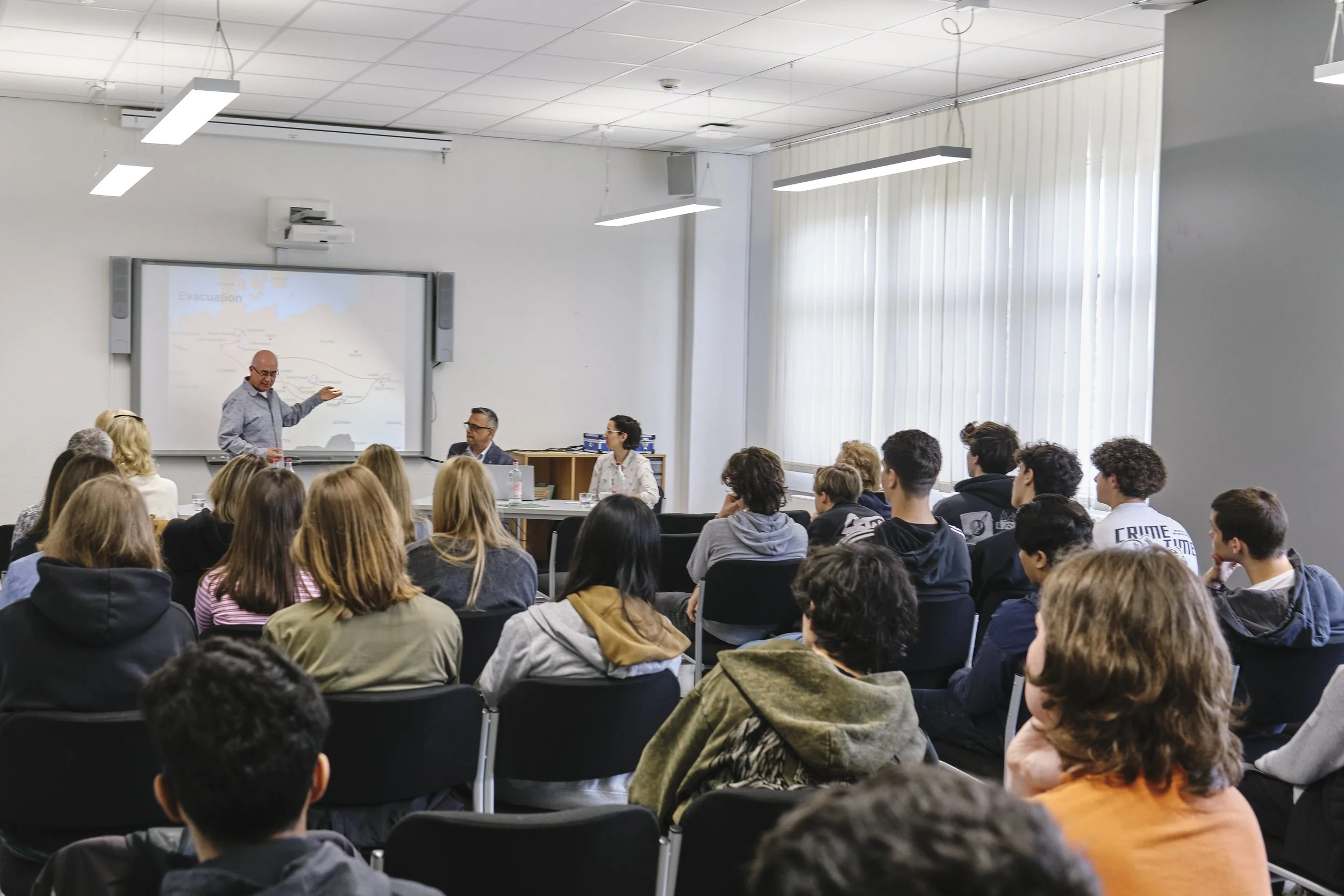
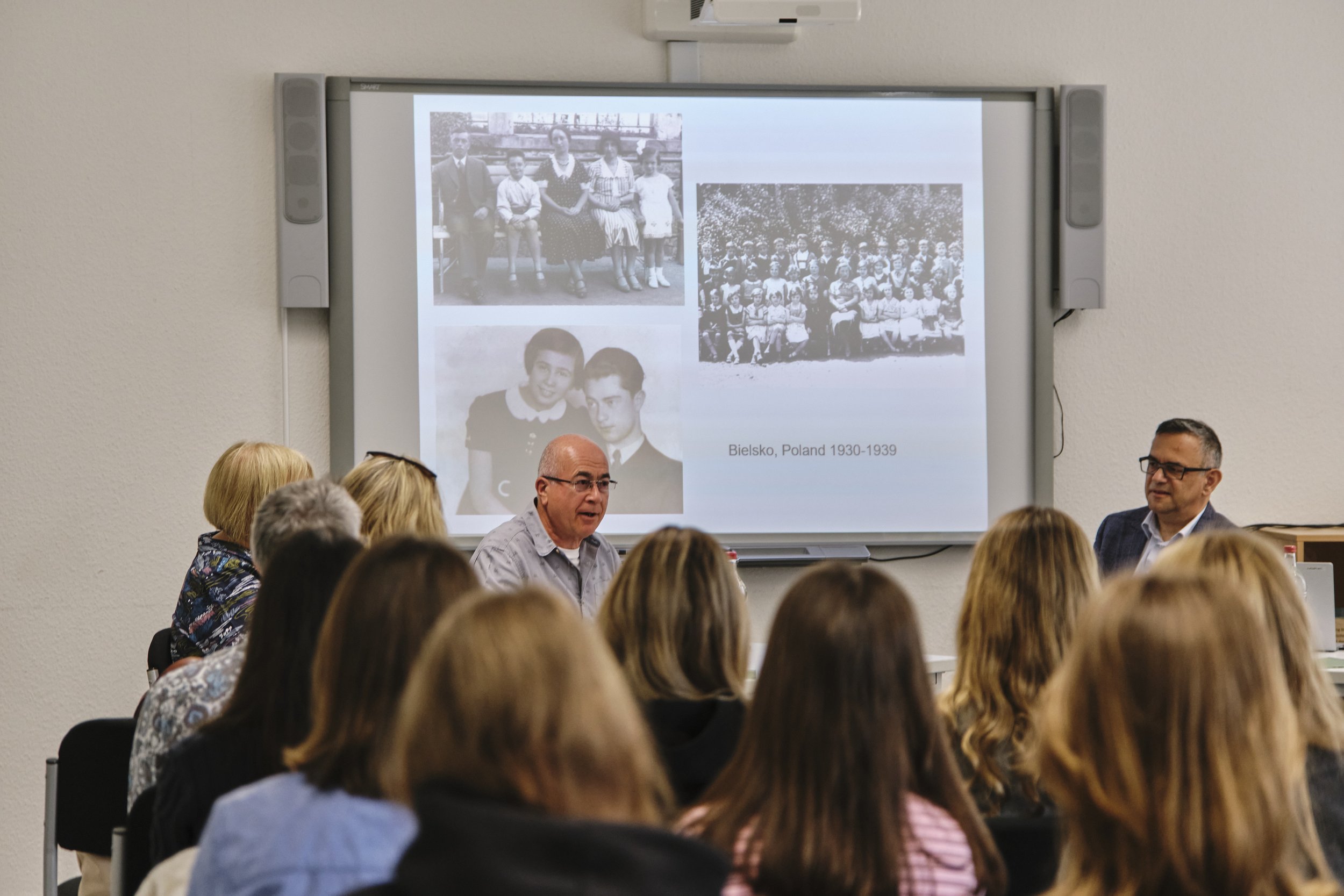
On Monday 4th May Peter and Moira took part in a panel discussion with local students. They were joined by Martin Liebl whose mother Dagmar Lieblová was an Auschwitz survivor, like Kitty. Both Martin with Peter and Moira gave a high level summary of their respective mother’s stories of survival and then took questions from the assembled students. It was a very good interactive session. Sadly Martin’s mother, Dagmar, died in 2018.
Peter had previously visited KZ-Gedenkstӓtte Neuengamme in 2010 together with Kitty, for a series of events for survivors and their children. When Peter reviewed some of the photographs taken from that time, he found one with Martin’s mother, Dagmar sitting behind Kitty and himself. That photo is the last one in the gallery, below.
See Peter and Moira talking about their work, standing outside one of the blocks at the Neuengamme Concentration Camp: Instagram
Peter and Moira have now visited all the concentration camps that Kitty was sent to after being evacuated from Auschwitz Birkenau and having endured the horrific death-march.
Uffculme and Court Fields Schools (Devon & Somerset)
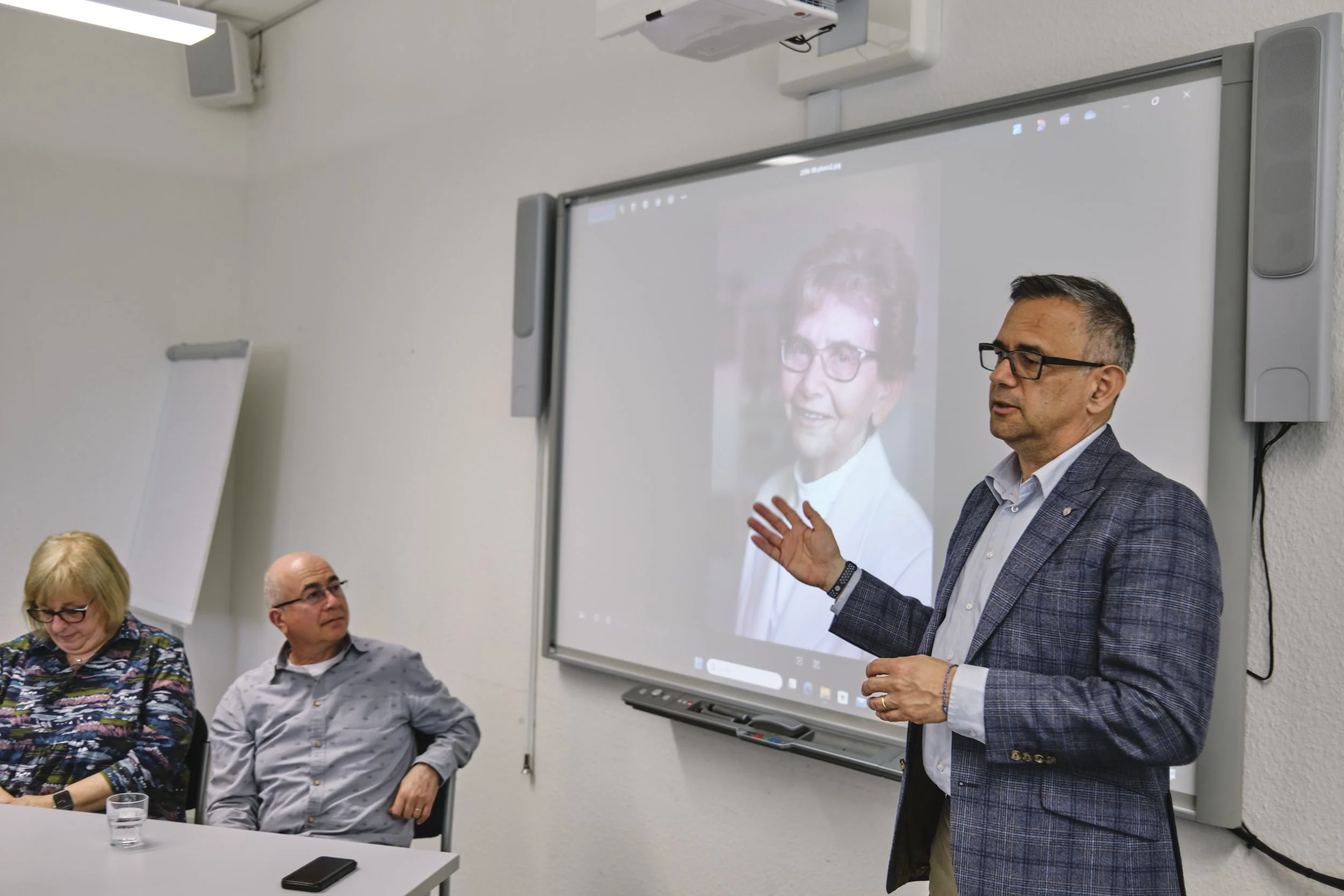
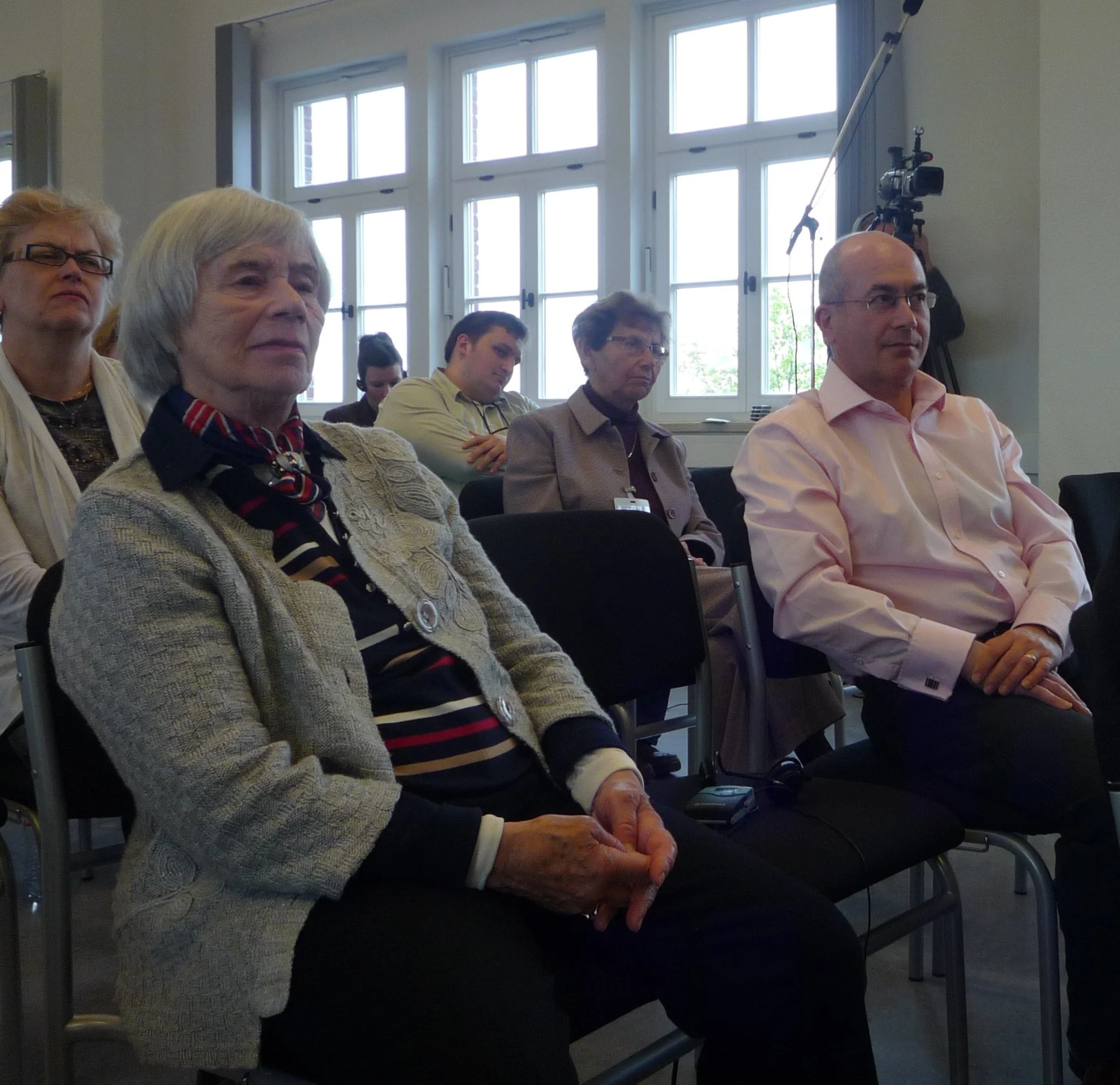
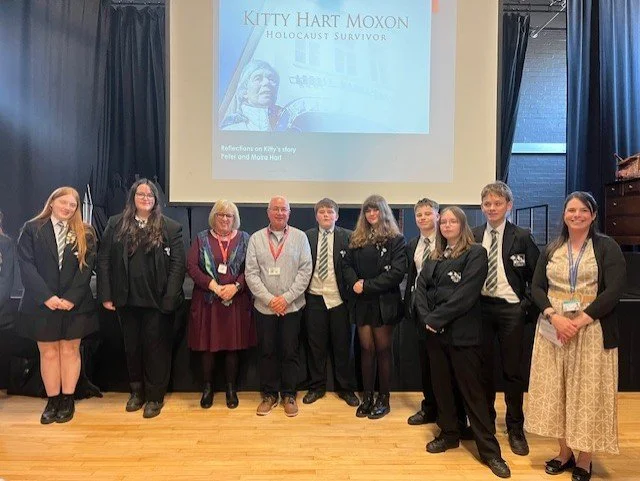
Moira and I were in Devon and Somerset last week (21 - 23 April ‘26) speaking at Uffculme and Court Fields Schools (Uffculme and Wellington respectively). We spoke to around 400 students in total, and they asked some superb questions at the Q&A session at the end of each talk. Both schools gave us a warm welcome and it was great to see how engaged the students and teachers were. We will be delighted to return to speak with the next cohort of students.
See more at this link: https://www.facebook.com/CourtFieldsSchool/posts/pfbid0cY1L3f1GJZ42BPaT556veUY6JRYgEFS8sQ4DdyxPaMrdp34g9vRmhxBeJ9rx8ybCl
Birmingham City FC Training Academy
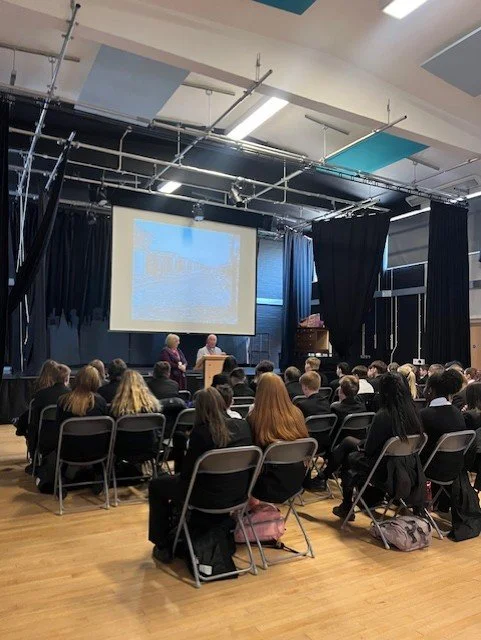
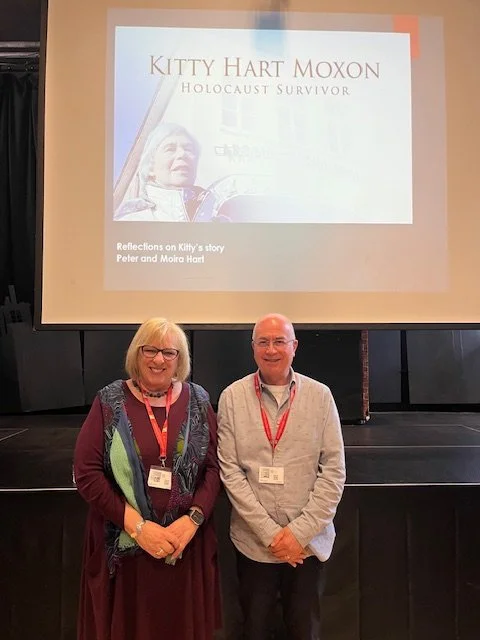
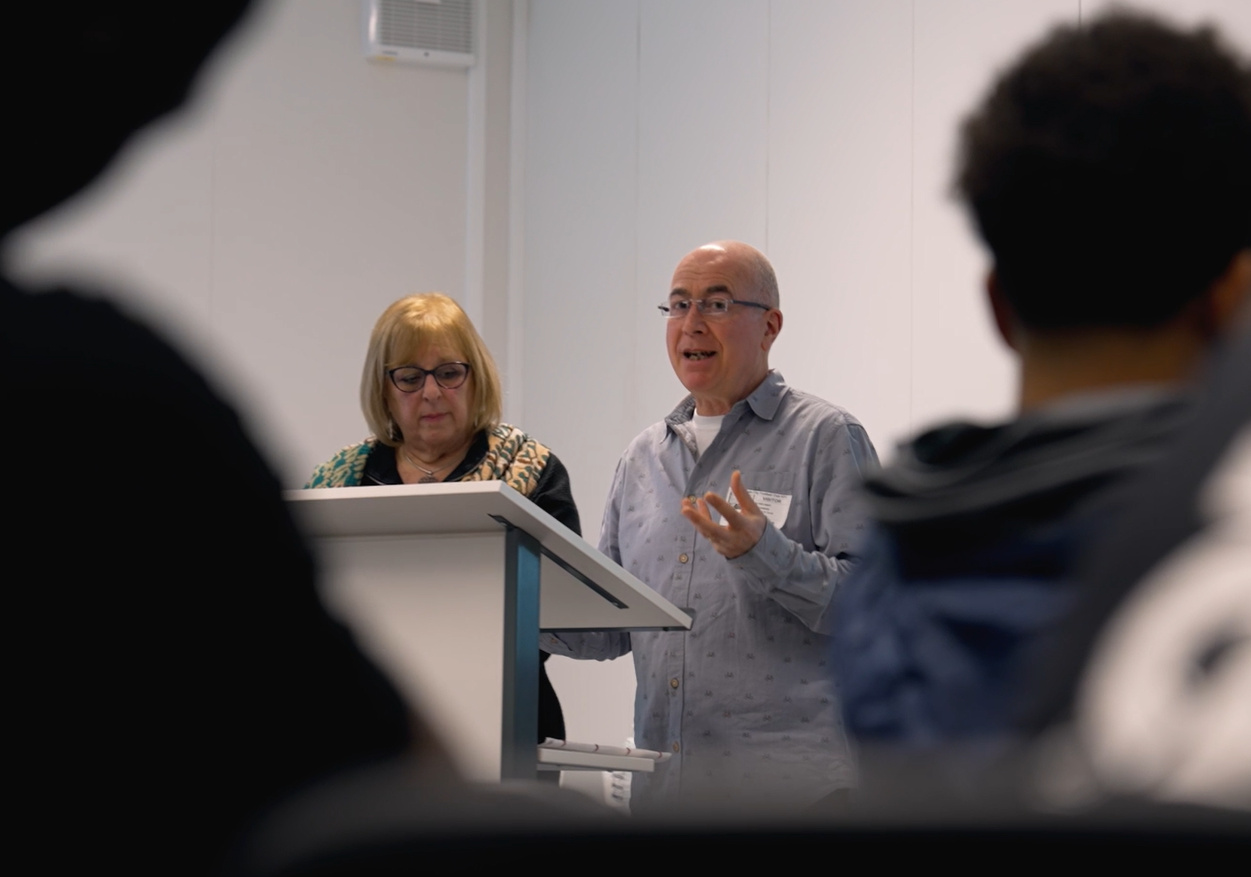
The day after Holocaust Memorial Day, 28th January 2026, Peter and Moira visited Birmingham City Football Club Training Academy in the outskirts of Birmingham. They were presenting Kitty’s testimony of survival during the Holocaust to around 20 students. They received a wonderful reception from Tim Smith, Head of the Academy, and all his staff. It began with a lovely welcome at the gate.
Tim introduced Peter and Moira to his staff and then took them on a tour of the academy and its facilities. Both Peter and Moira have presented at football clubs previously, notably Bristol Rovers FC and Plymouth Argyle FC. They were really impressed with Tim’s team and the work that they do and the amazing facilities that the Club has invested in.
It is incredibly difficult to be selected to join the Academy for obvious reasons. Once on board, the students are given huge opportunities not just to excel with their footballing skills but to also receive an all-round education. It is a fact that only a small percentage of the students actually get through to become professional footballers at the top flight. So for the majority, it is very important that they receive, and take on board the skills necessary to pursue a different career path. Birmingham City FC Training Academy makes sure that this happens.
Peter and Moira presented Kitty’s story, as they usually do. Afterwards there was a question and answer session. Tim’s Team filmed the session, including a short interview afterwards and in the same afternoon produced this video (follow the link), which sums up the whole session:
Retracing History: Peter and Moira Hart’s Journey Through Wartime Germany
In the autumn of 2025, Peter and Moira Hart undertook a powerful journey of remembrance and discovery, retracing the route taken during the final months of the Second World War by Peter’s mother, Kitty Hart-Moxon.
Kitty’s story is well documented in her book Return to Auschwitz. In the final few months of the war, as a consequence of the evacuation of Auschwitz-Birkenau, she was forced onto a death march and subsequently transferred between several camps inside Germany, where prisoners were used as forced labour. Two of these locations were Porta Westfalica and Fallersleben. This visit gave Peter and Moira the opportunity to deepen their understanding of what Kitty endured in these places and to reflect on the lasting impact of her experiences.
In both locations, a strong culture of remembrance has developed. Local charities, supported by municipal authorities, are committed to bringing this history to light through permanent exhibitions, museums, and educational programmes. Peter and Moira were invited to take part in special commemoration events and to speak publicly about Kitty’s testimony.
The journey began in Porta Westfalica, a town known for its striking landscape and, less visibly, for its vast network of underground factories built by the Nazis. Here, Peter and Moira explored the tunnels where forced labourers, including Kitty, were made to work in appalling and dangerous conditions, producing armaments and electronic components hidden from Allied bombing raids.
Kitty spent approximately three weeks here in February 1945, forced to work underground in the Philips factory assembling radio valves. Peter and Moira were joined by relatives of other forced labourers from across Europe, many of whom had been political prisoners or members of resistance movements. Each family shared their relative’s story and reflected on how this legacy continues to shape their lives.
During the weekend, a memorial service was held to honour the many forced labourers who died or were killed under these brutal conditions. Peter was invited to plant a tree alongside the grandson of a Polish slave worker — a poignant symbol of remembrance and continuity.
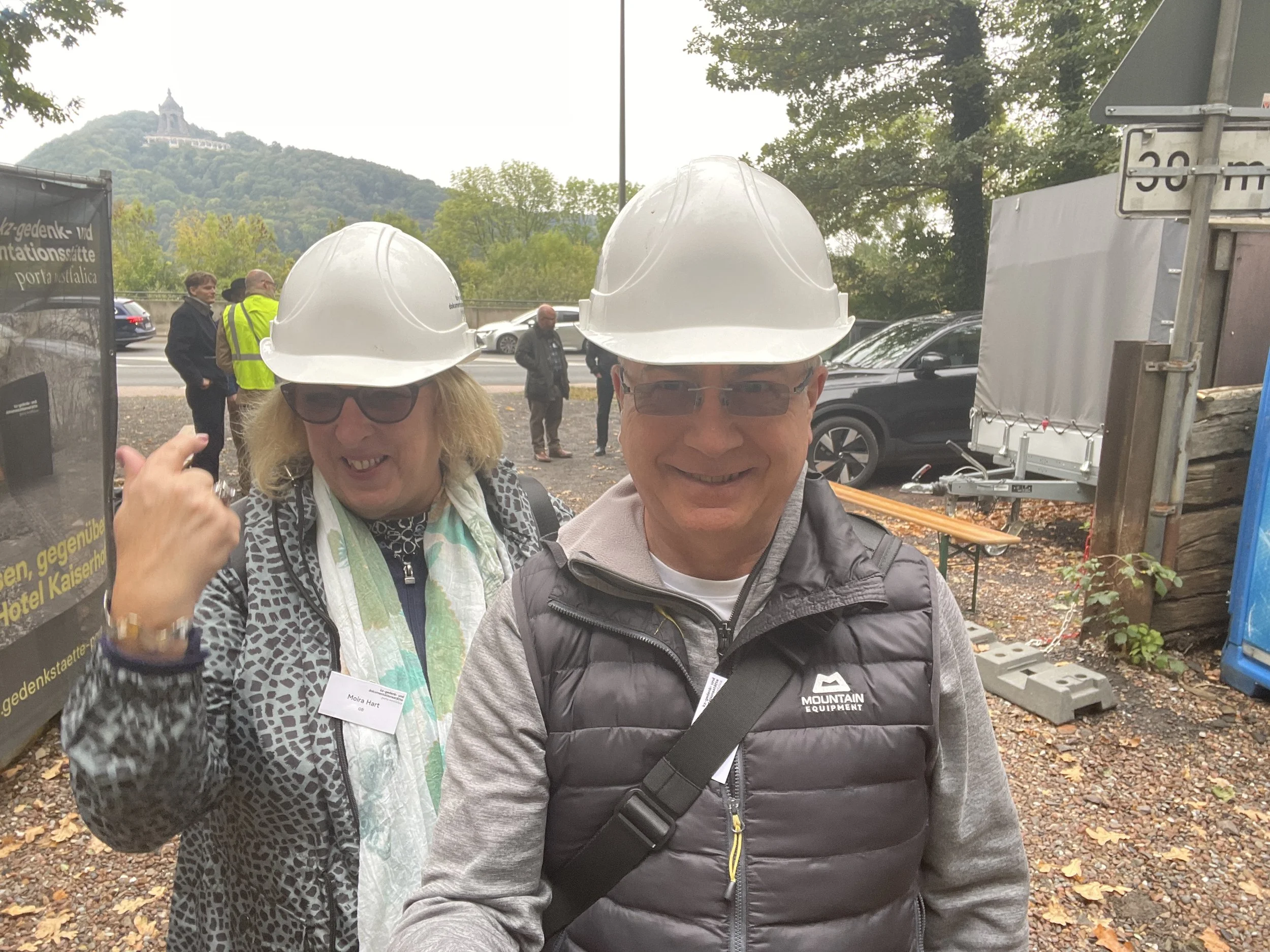
A guided tour of the tunnel complex (with hard hats) and the accompanying museum and exhibition brought home the harsh realities faced by the inmates. Peter and Moira also reflected on Kitty’s extraordinary resilience and her determination to bear witness in later life. They will soon be collaborating with the local remembrance group, which plans to incorporate Kitty’s testimony into an expanded permanent exhibition.
Then it was on to Fallersleben, now part of the city of Wolfsburg, to learn more about the wartime history of the DKF car factory that later became the Volkswagen plant, now the largest car factory in the world. During the war, the site was repurposed for military production.
In April 1945, during a heavy Allied bombing raid, Kitty was briefly transported there with other prisoners. She spent only a few days at the site but refused to enter the air-raid shelters deep within the factory, as they reminded her of the gas chambers she had witnessed at Auschwitz-Birkenau. Though brief, this episode captures the chaos of the war’s final days and the profound trauma carried by survivors.
As in Porta Westfalica, a locally supported remembrance initiative — involving the city authorities and the Volkswagen company — is working to preserve and teach this history.
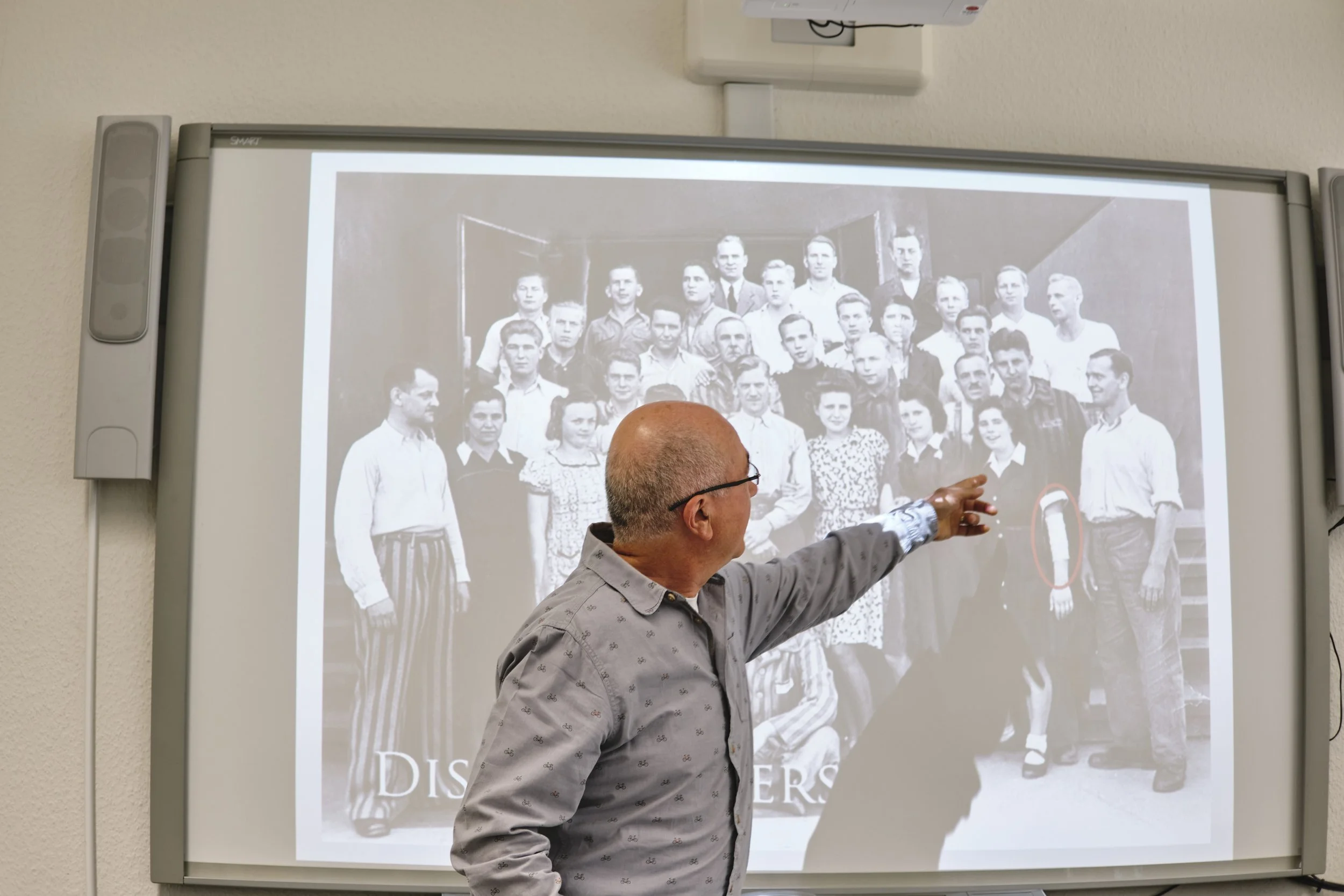
After leaving Fallersleben, Kitty and her fellow prisoners were transported to Salzwedel. The group was abandoned by the Nazis in a sealed cattle truck on a railway siding and left to suffocate. Eventually, they were moved into a local concentration camp. Two days later, they were liberated by the advancing US Army.
Standing on the same ground, Peter and Moira reflected on the relief and hope that must have accompanied liberation, as well as the enduring significance of these stories for future generations.
They later met with the town’s mayor, participated in a short commemoration ceremony at the camp memorial, and took part in a question-and-answer session with local history students.
Peter and Moira’s autumn visits were acts of remembrance, linking personal family history with the wider narrative of the Holocaust and the Second World War. By visiting these sites, they honoured not only Kitty’s courage but also the countless others who suffered and perished.
Holocaust Memorial Day 2026 - Buckingham Palace reception hosted by King Charles
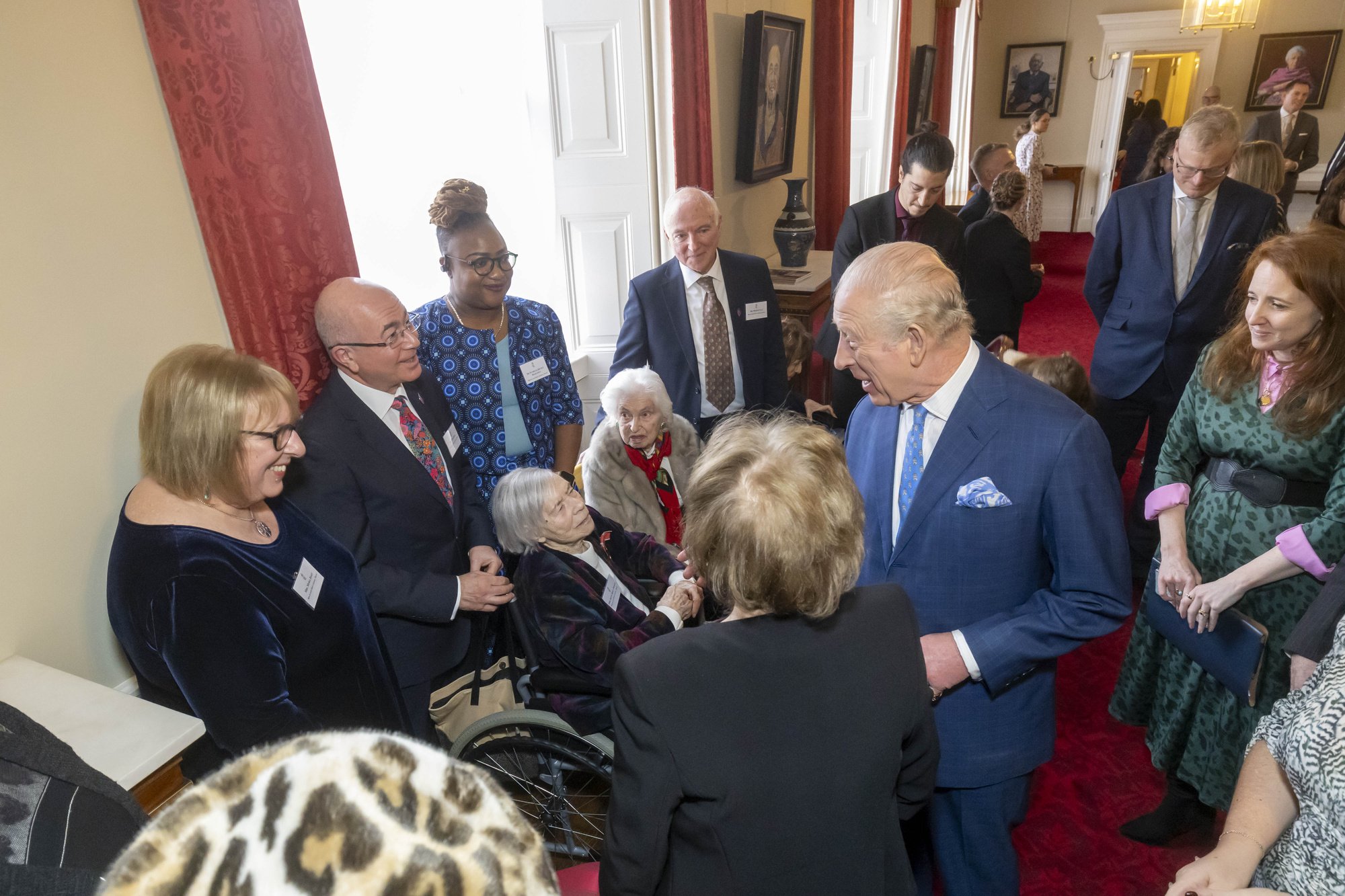
Kitty, together with Peter and Moira, was honoured to attend a reception hosted by King Charles at Buckingham Palace for Holocaust Survivors and their families on Holocaust Memorial Day, on 27th January 2026. The King personally spoke to the survivors and families, including Kitty, Moira and Peter. The reception took place in the gallery where the recently commissioned portraits of survivors hang on the walls. It is very much appreciated that the King and members of the Royal Family support survivors of the Holocaust and the continuing need for remembrance.